| |
|

|
|
Karo-Aviation
visit's the Bastille Day Flypast 2026 in Paris
Article and pictures by Rolph Klijn
On Tuesday 14 July 2026 we travelled to Paris to photograph the aerial
part of the French National Day parade.
|
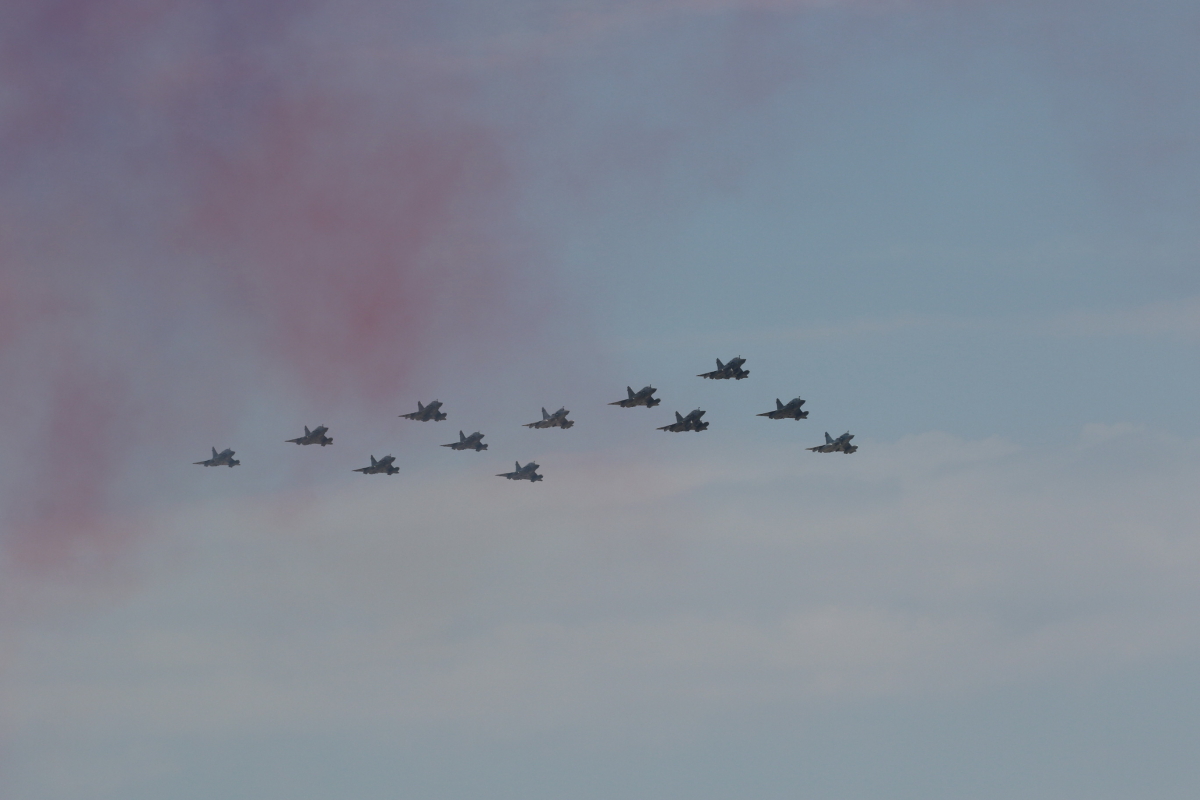
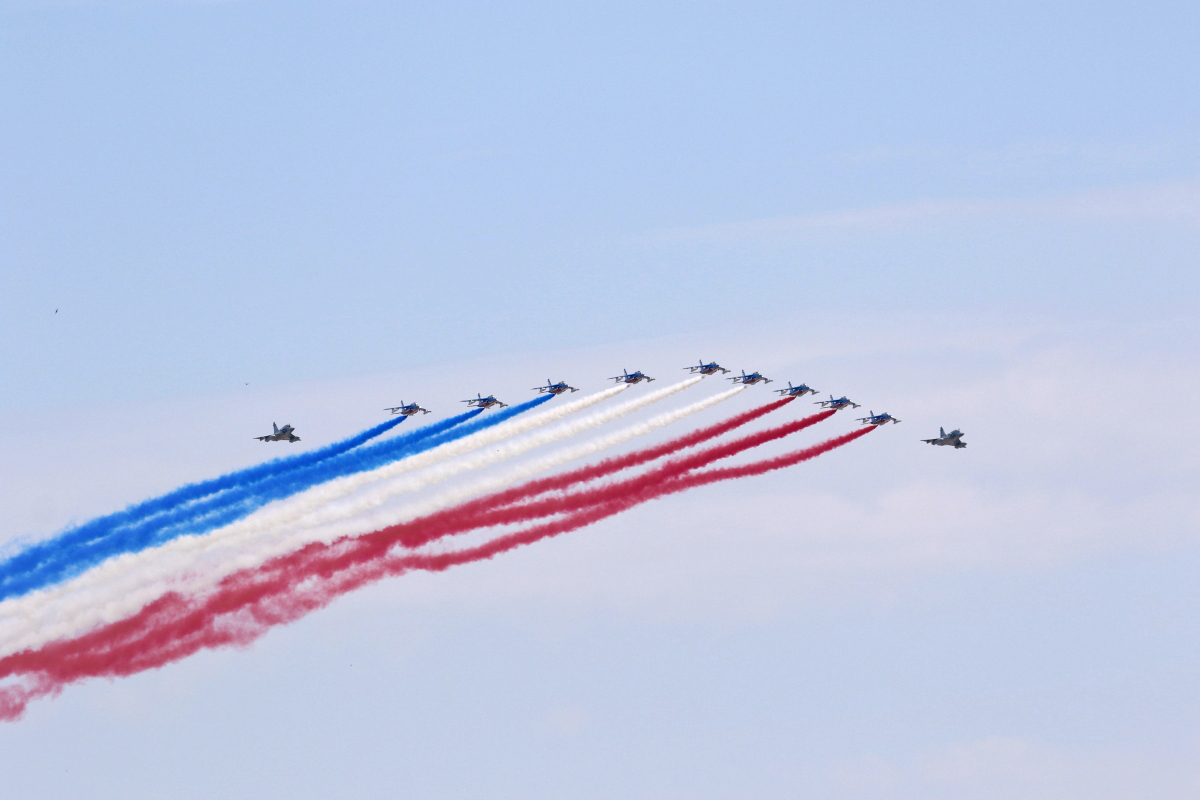
The Patrouille de France traditionally opens the aerial parade, leading
the Bastille Day flypast over the Champs-Élysées in Paris
|
The annual flypast is always one of the
most impressive aviation moments in Europe, but this year’s edition was
larger than in recent years and included a clear international
dimension. Ukraine and several European partner nations were invited to
take part, while the programme brought together a wide variety of
aircraft and helicopters from L' Armée de l'air et de l'espace ,
Aéronavale, L'armée de TerreArmy and allied aircraft over the capital.
The flypast passed
over the
traditional axis of the parade from the Grande Arch de la Defense to
the Place de la Concorde, with aircraft flying over the Champs-Élysées.
Instead of joining the crowds directly along the avenue, we positioned
ourselves near the park at Les Invalides. This gave a different
perspective on the formations, with enough space to follow the aircraft
as they crossed the city and to photograph several groups in succession.
A short background
to 14 July
Bastille Day, or Le
Quatorze Juillet,
is the French national day. It refers to the storming of the Bastille
in Paris on 14 July 1789, one of the symbolic opening events of the
French Revolution, and also to the Fête de la Fédération of 14 July
1790, which celebrated national unity. Since 1880 the date has been
marked by an annual military parade in Paris, traditionally moving from
the Arc de Triomphe along the Champs-Élysées towards the Place de la
Concorde.
For aviation photographers, the morning flypast is the highlight. The
Patrouille de France opens the aerial parade with the colours of the
French flag, followed by operational formations that show the structure
and capabilities of the French armed forces and, in some years, invited
foreign participants.
|
 |
|
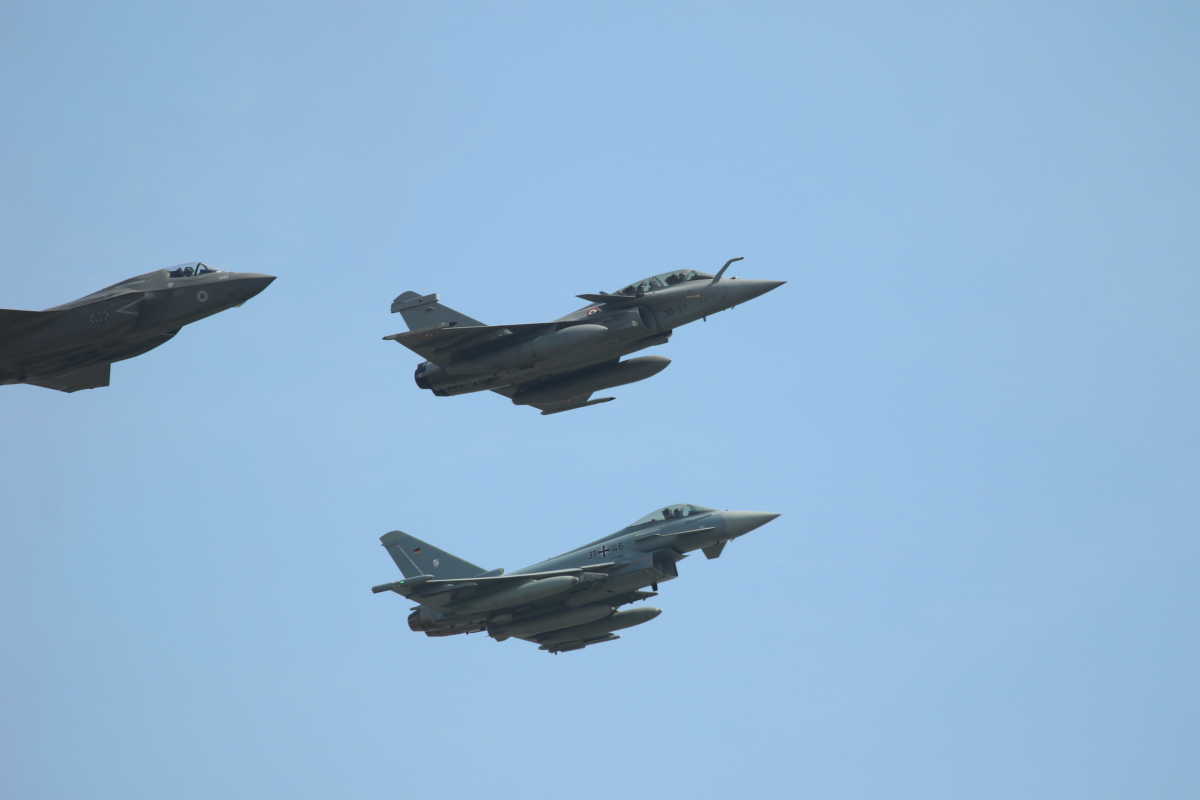
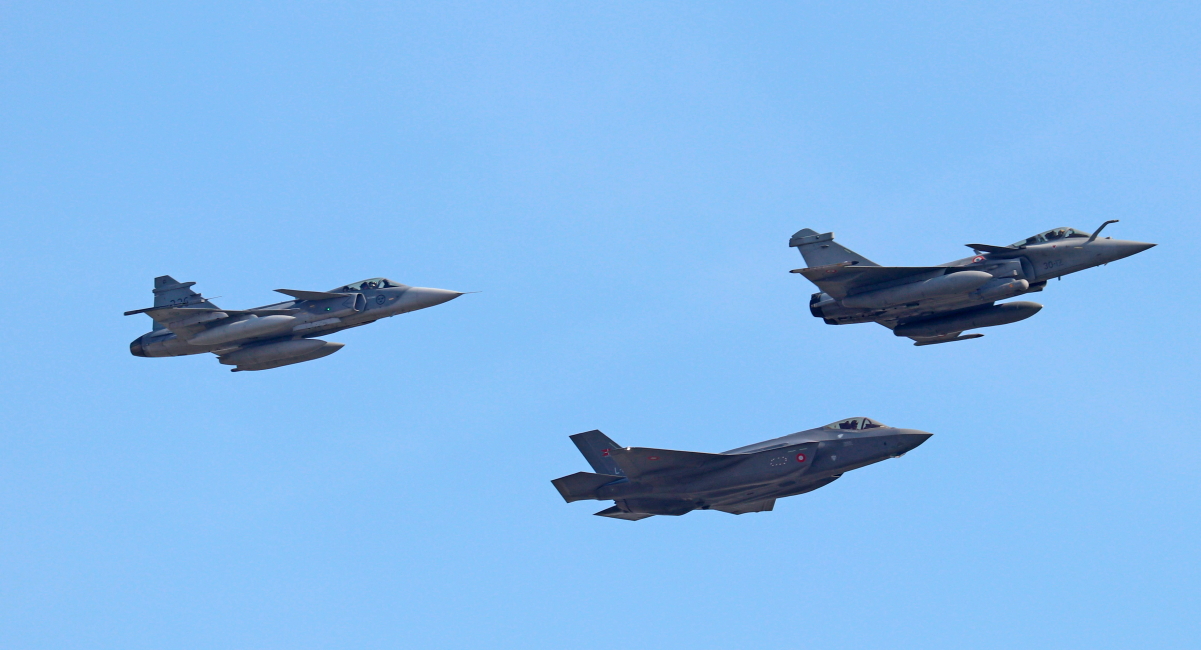
In the first formations was a mix of participating nations in the parade.
|
|
Europe in the Paris sky
The 2026 parade was organised around the theme of Europe’s strategic
awakening. In practical terms this was visible in the size of the
aerial programme and in the presence of aircraft and crews connected
with several European countries. Ukrainian participation received
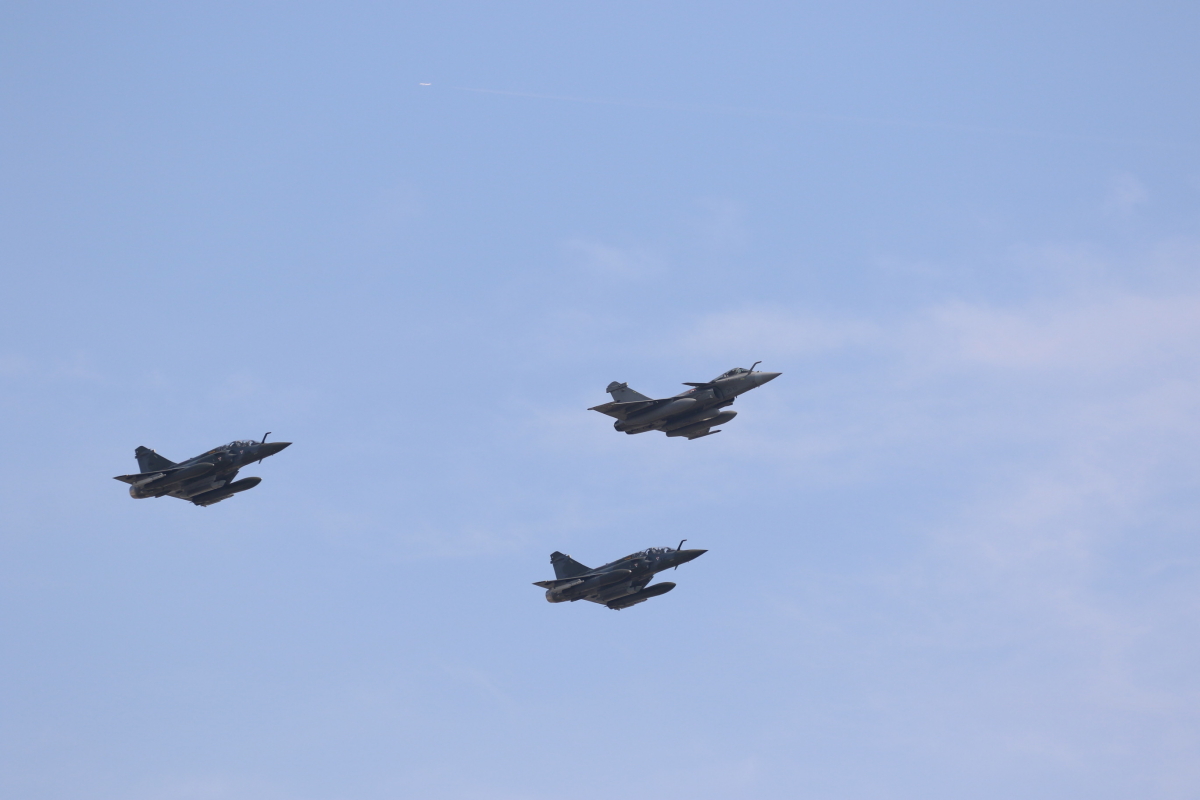
particular attention, with two Mirage 2000B trainers opening the
sequence ahead with the Patrouille de France. These aircraft were
French two-seat trainers, flown by French instructors with Ukrainian
student pilots on board.
Keeping the political interpretation aside, it made the 2026 edition
visually and historically notable. The official programme listed 98
fixed-wing aircraft and 32 helicopters, making it one of the largest
Bastille Day flypasts in recent years. For the photographer this meant
a fast-moving sequence of formations, with only short gaps between the
groups.
The fixed-wing formations
The fixed-wing flypast started with the familiar red, white and bleu
smoke trails of the Patrouille de France, this time accompanied by the
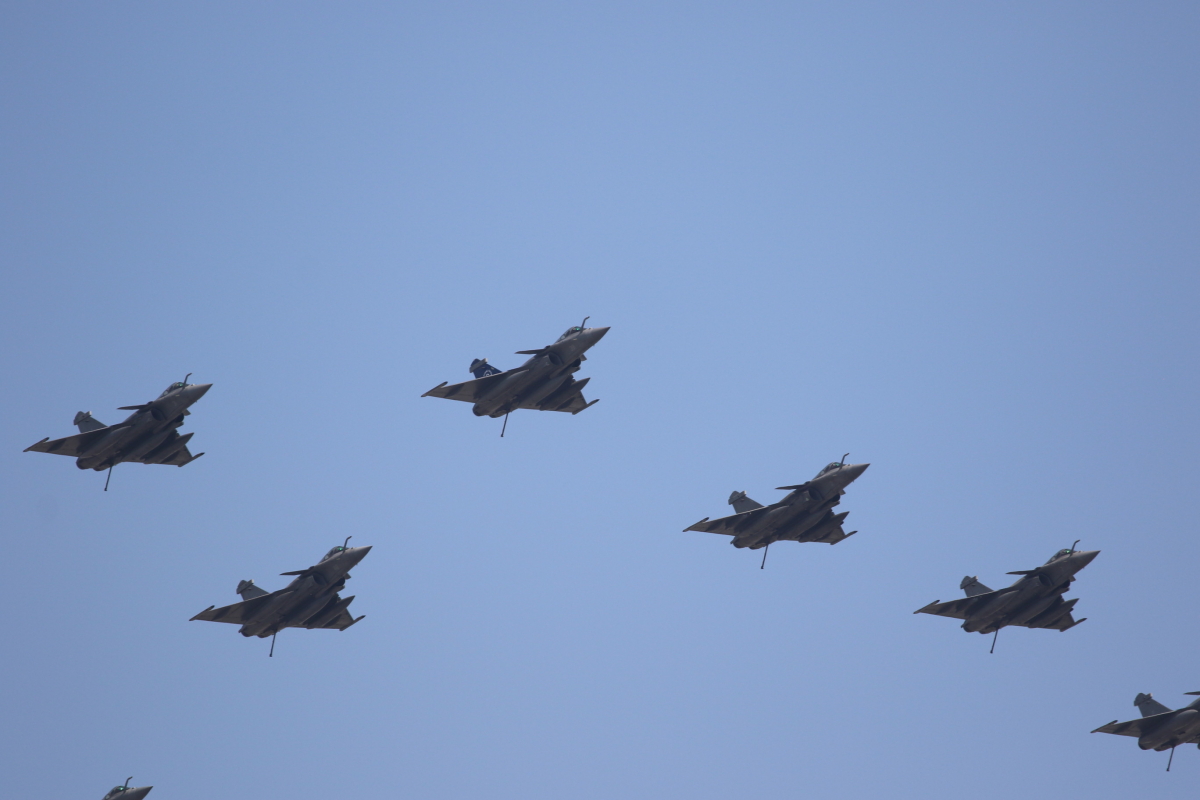
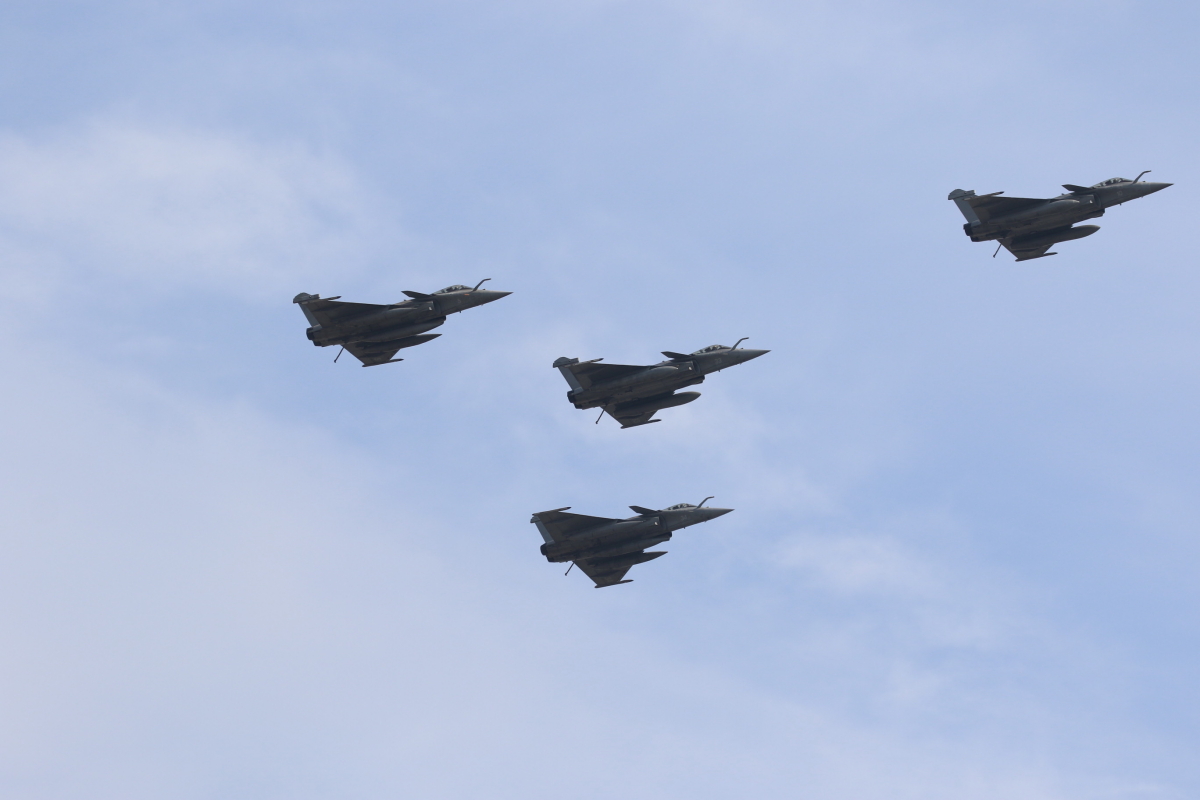
Ukrainian-linked Mirage 2000B pair. Behind them followed several
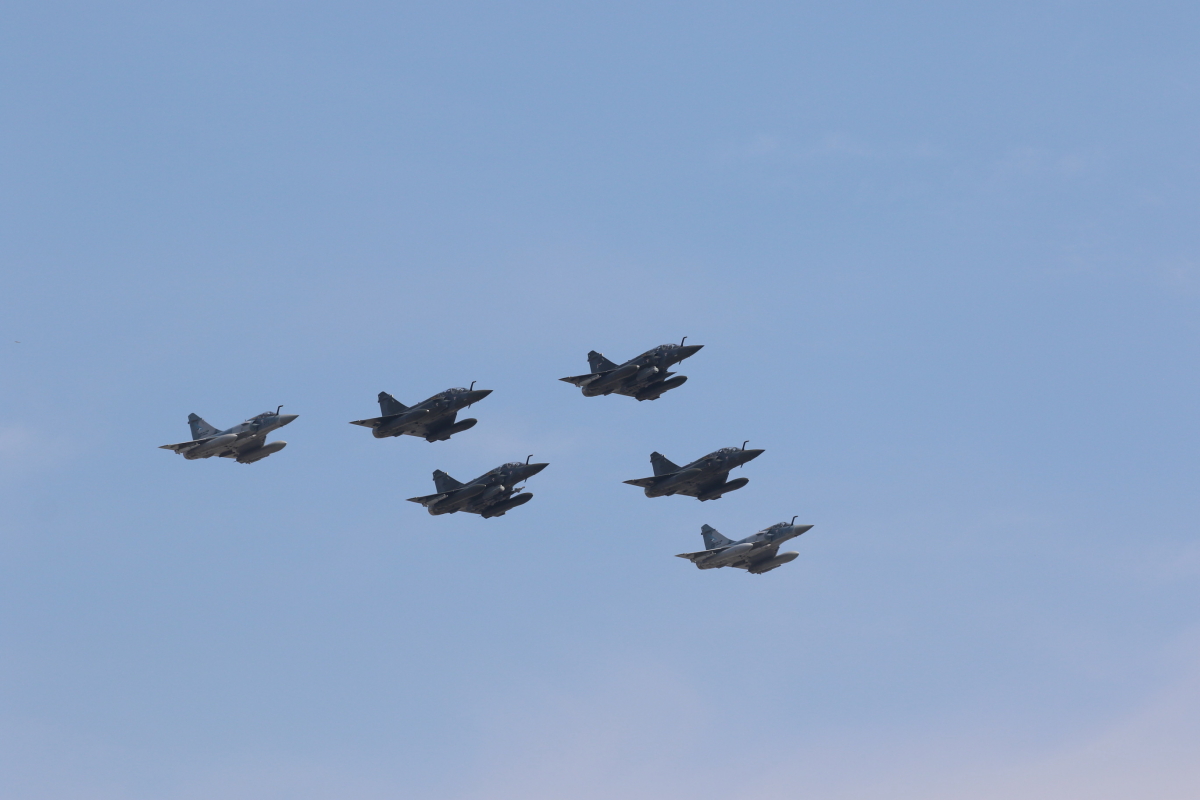
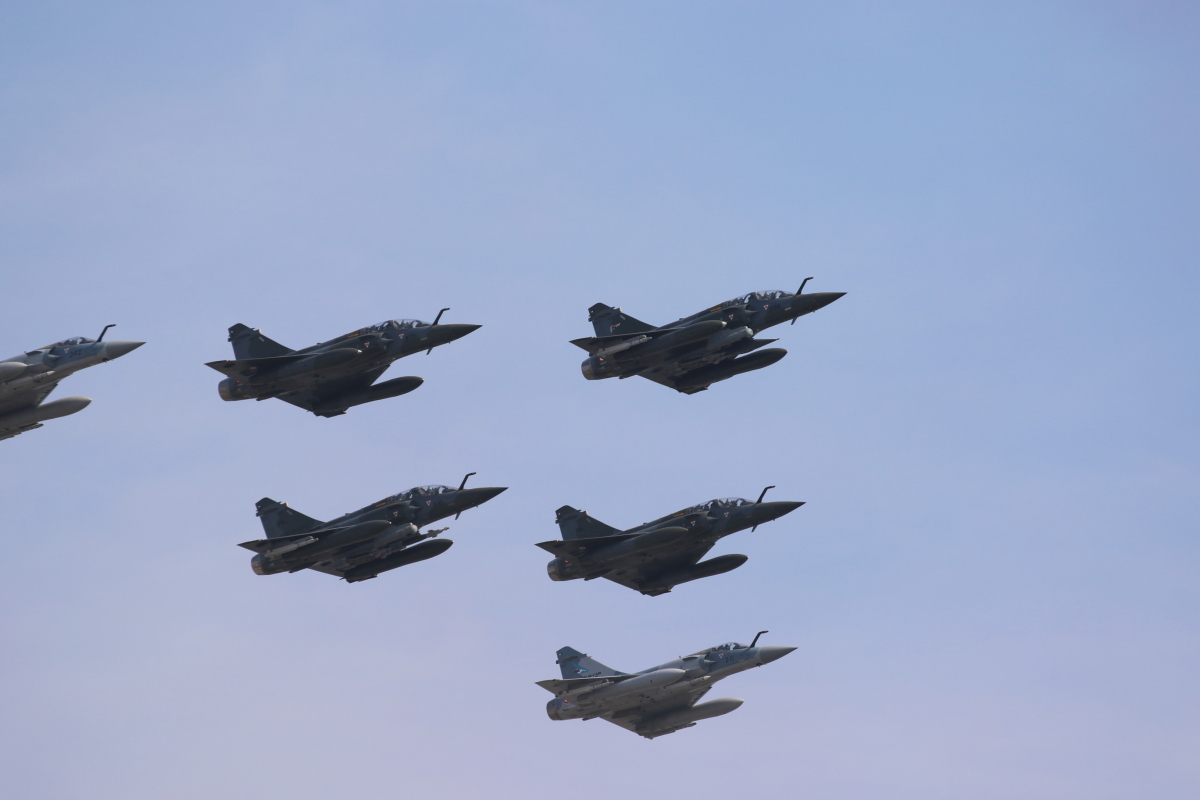
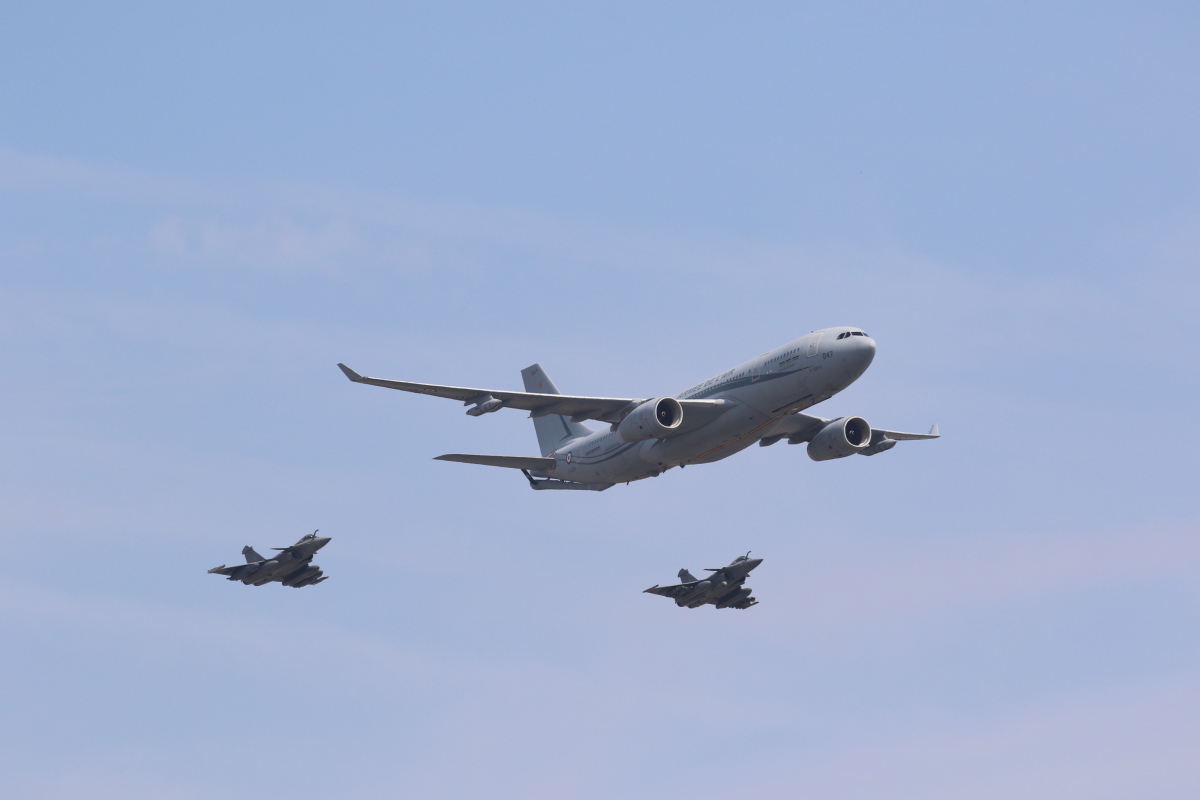
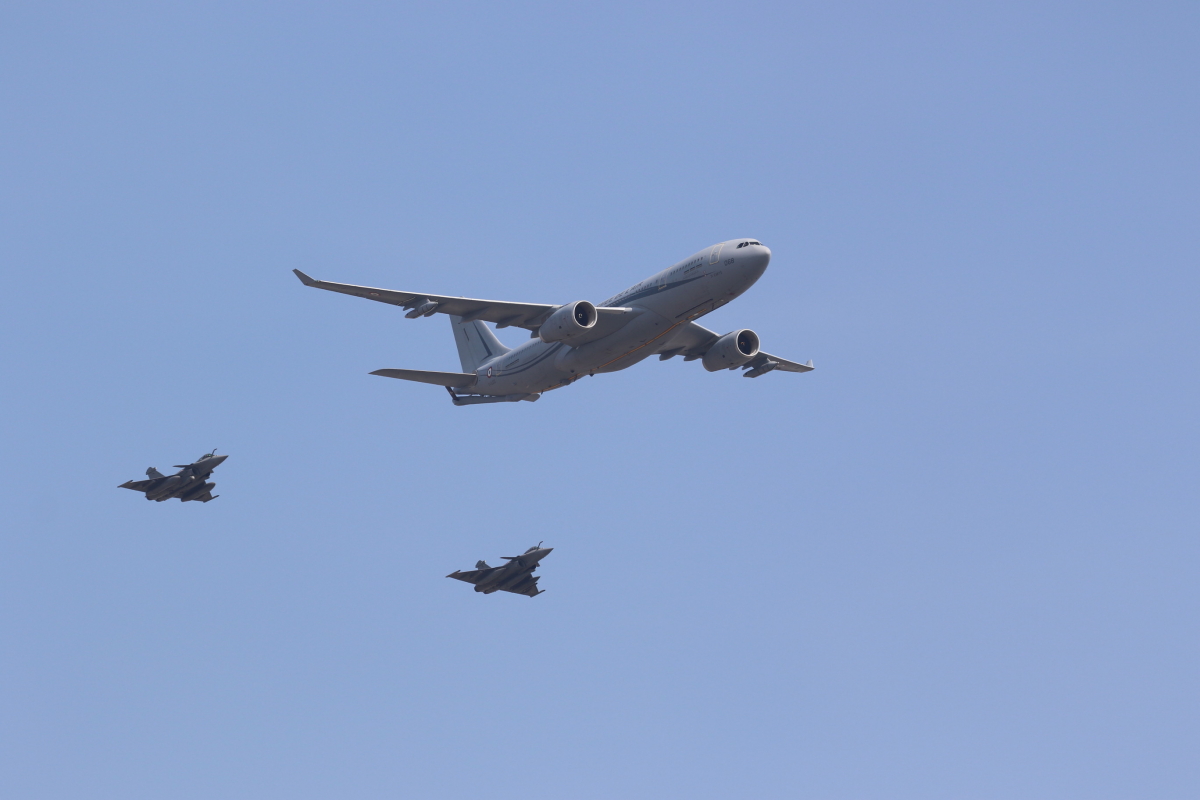
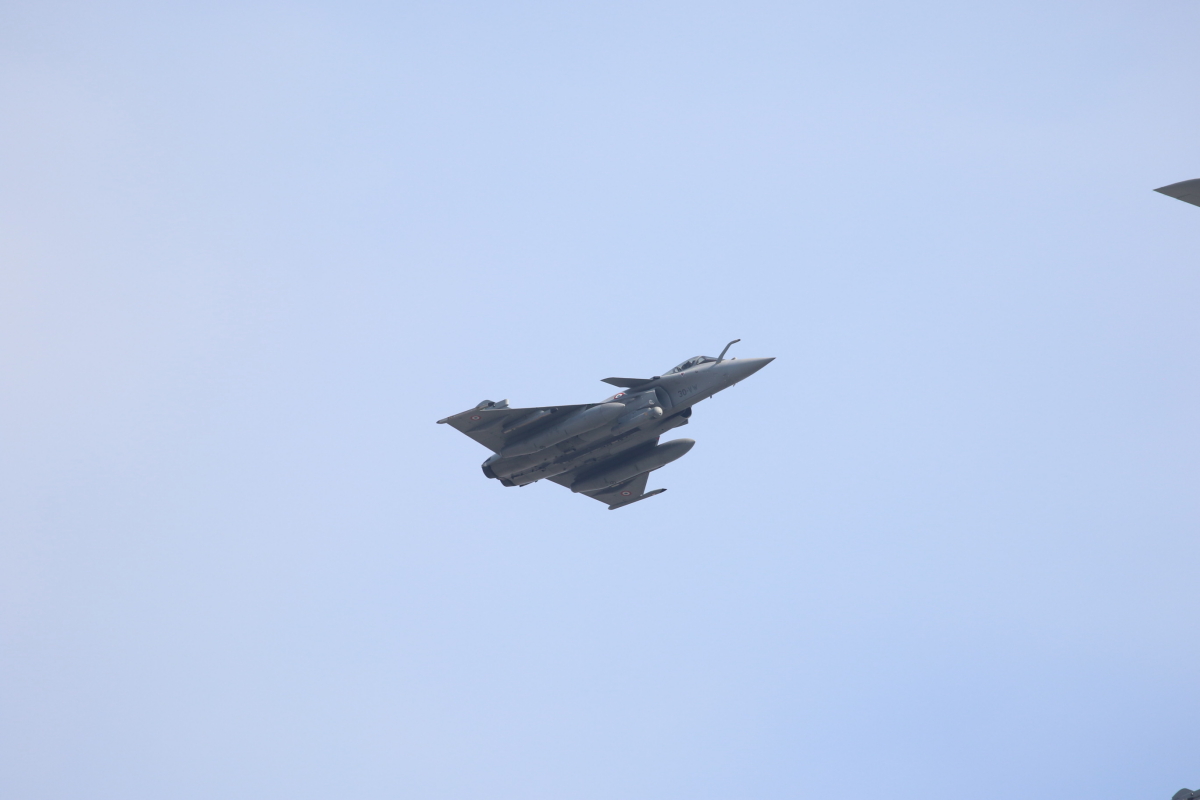
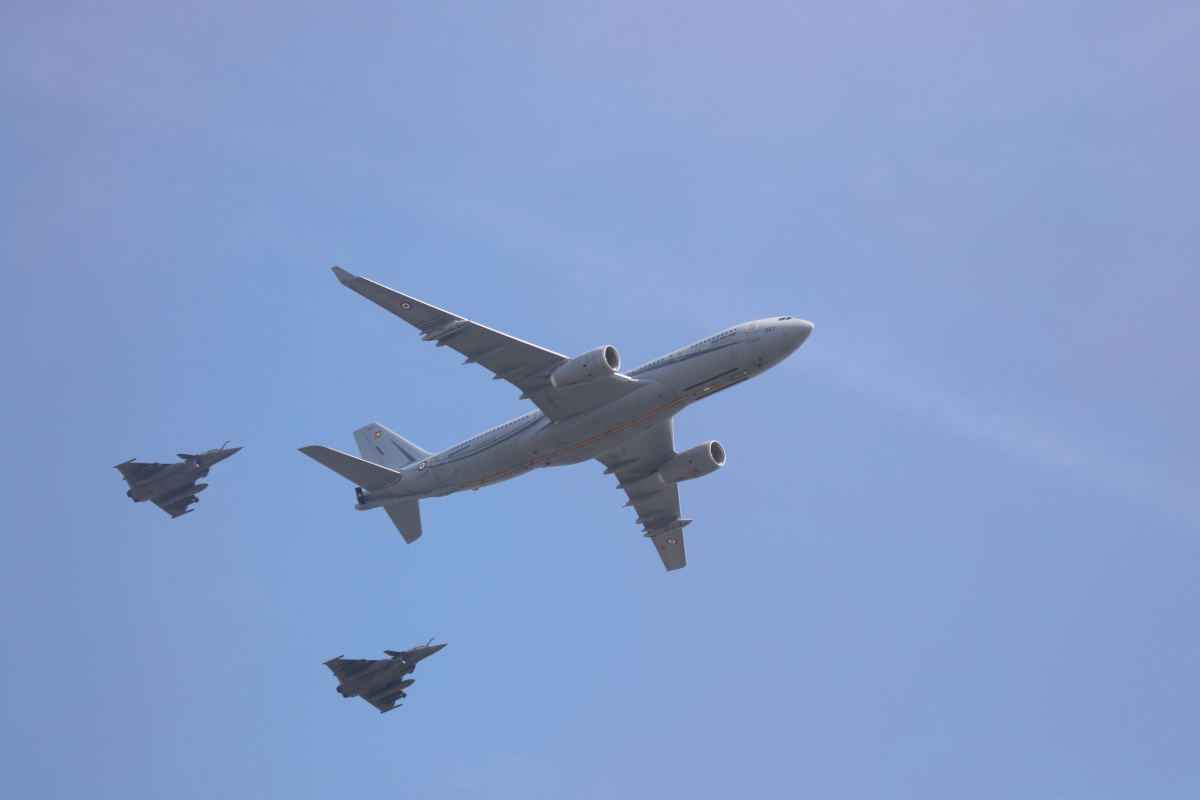
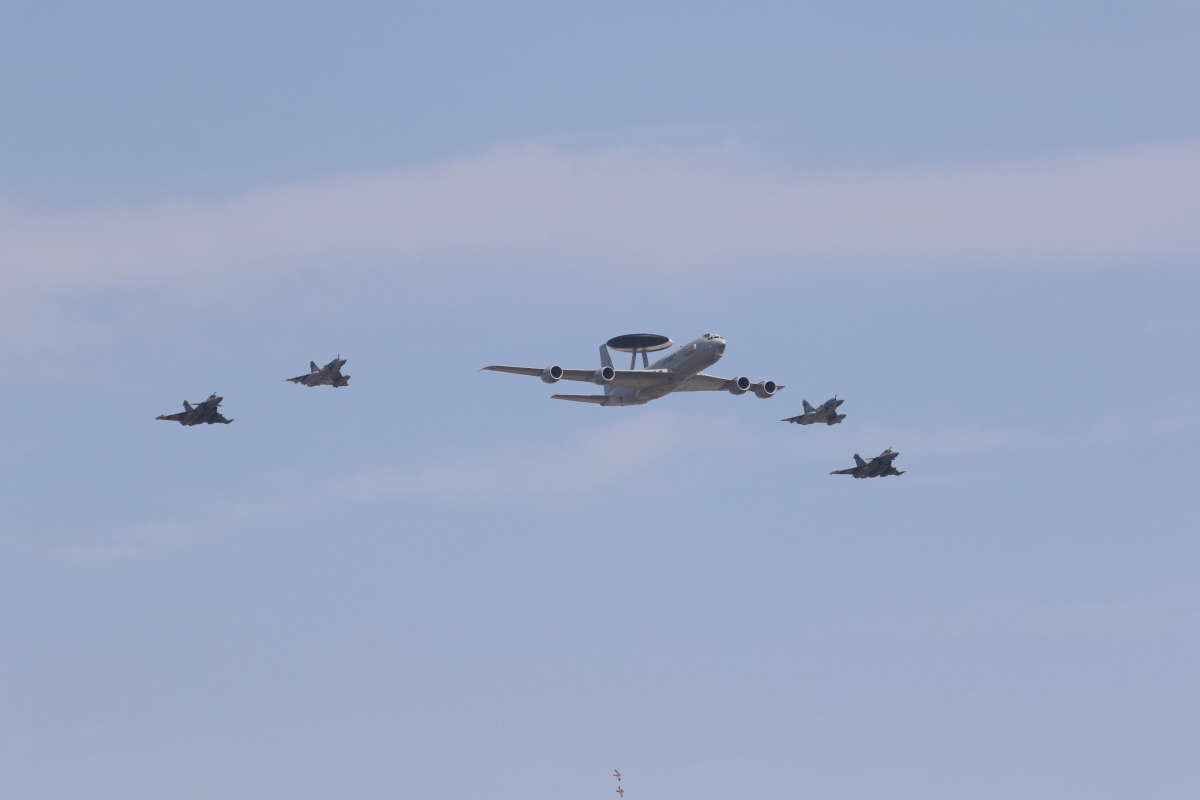
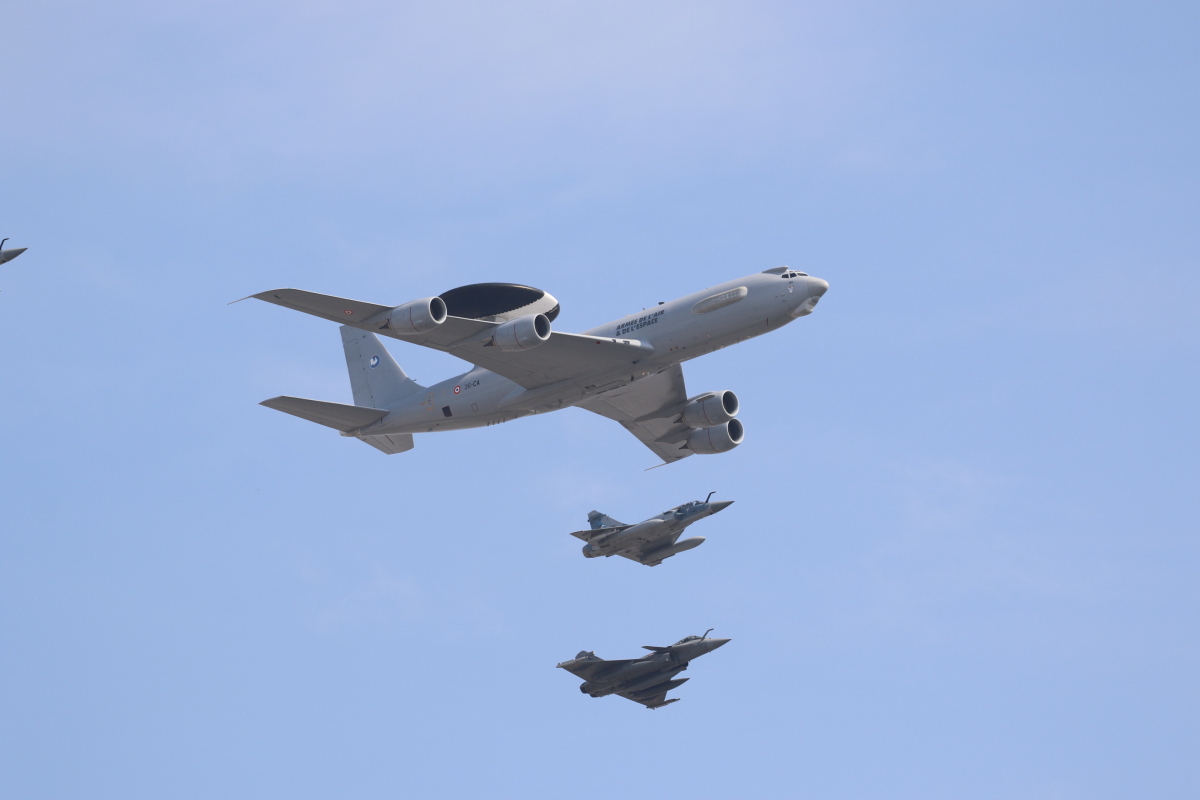
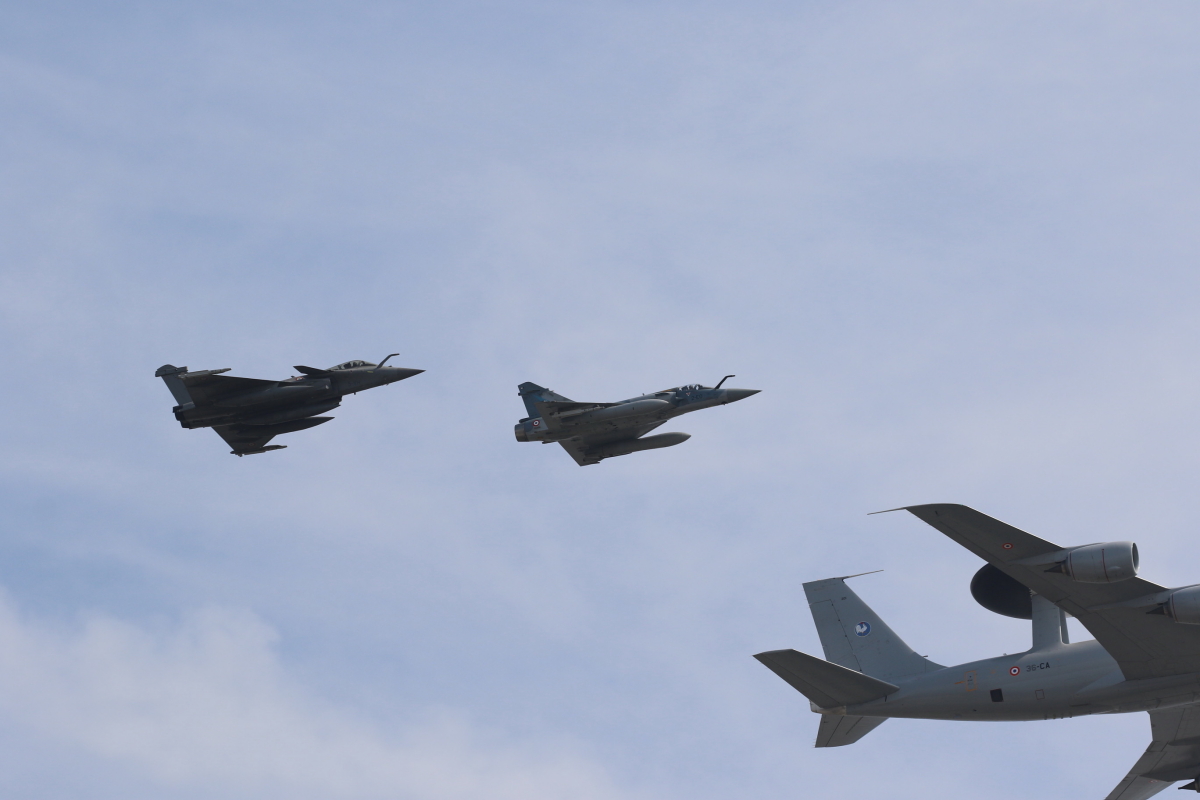
operational blocks, including Rafale and Mirage formations, strategic
air forces aircraft, naval aviation, transport and support aircraft,
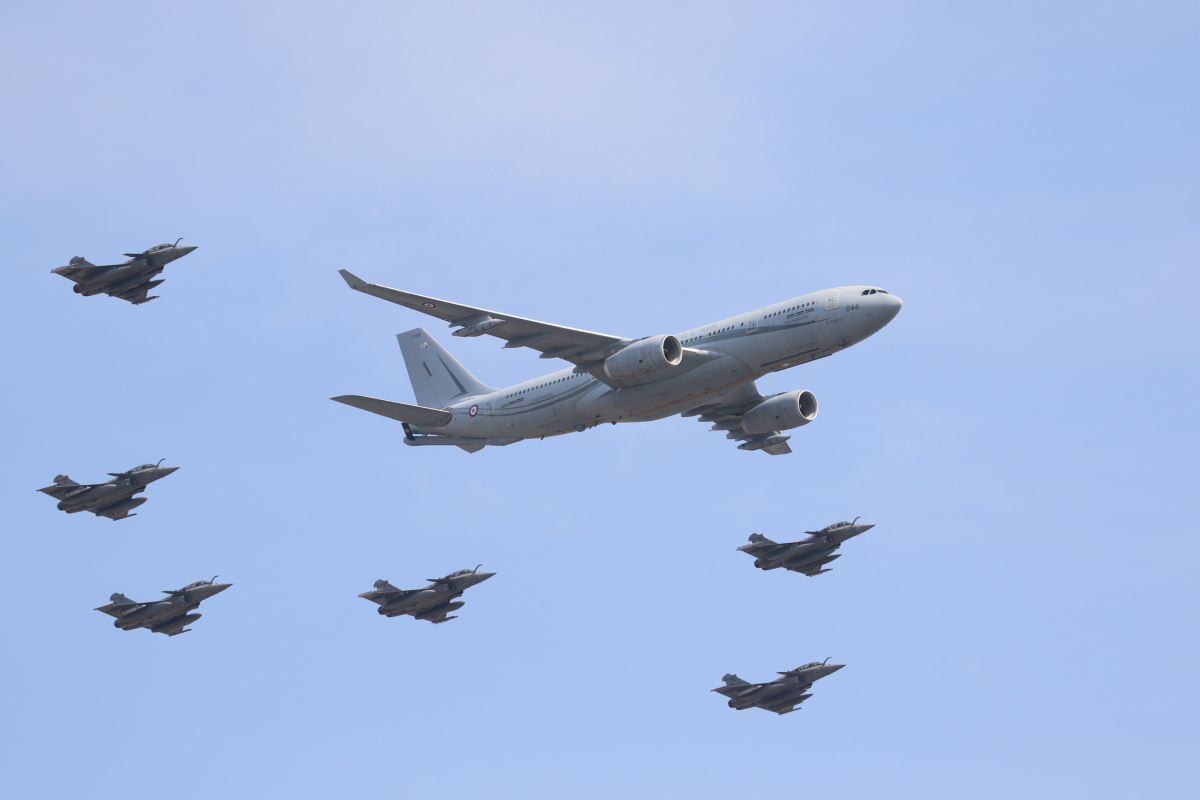
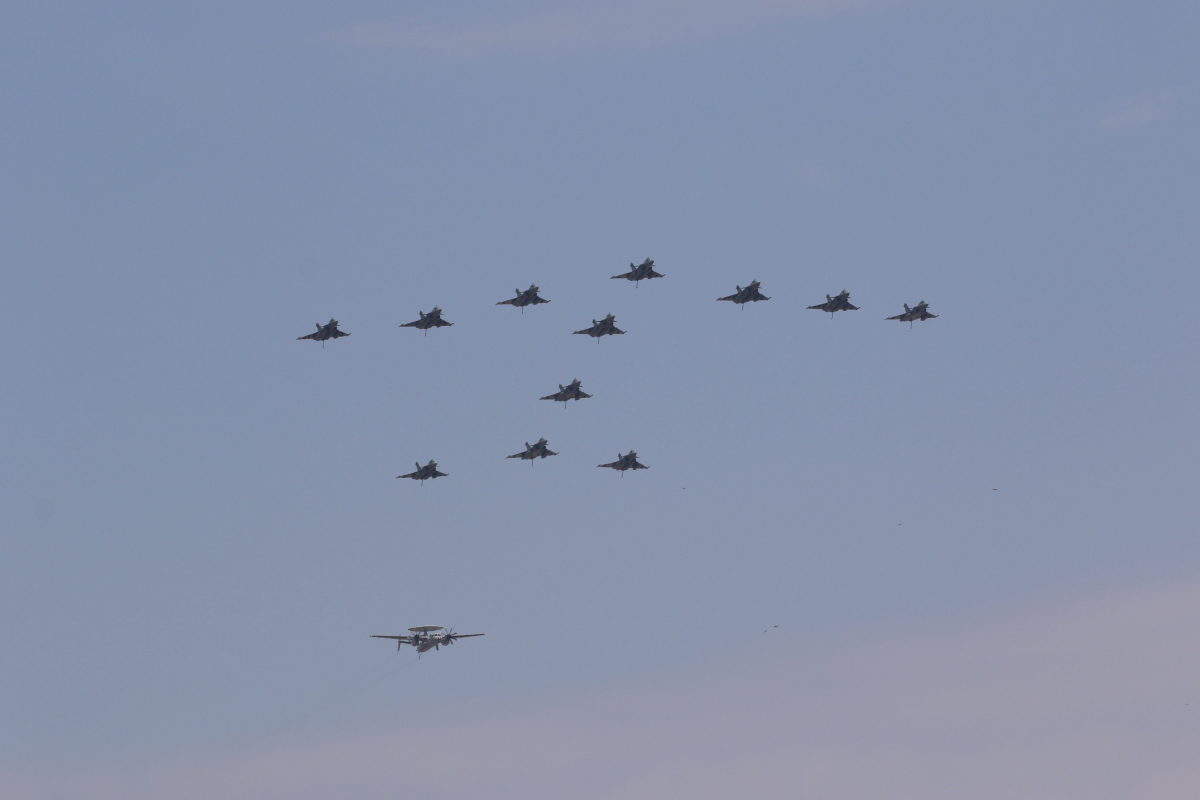
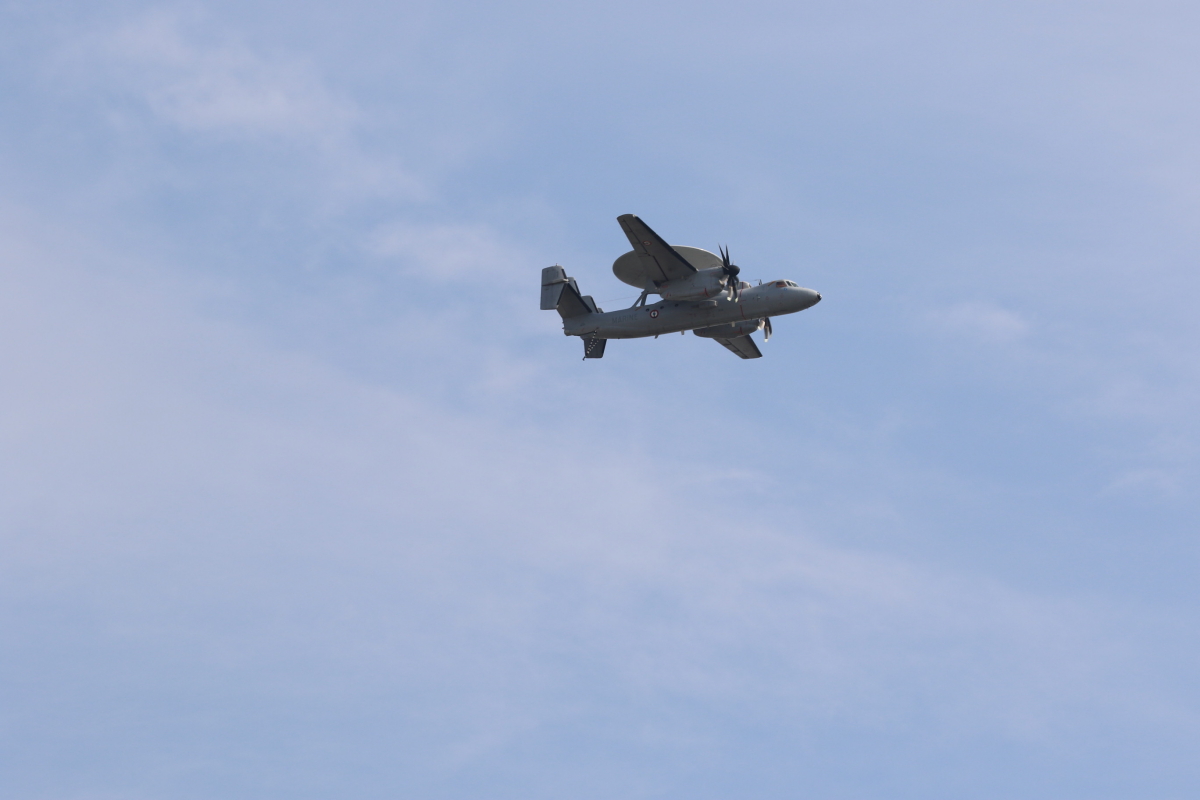
and multinational elements. The French Navy was strongly represented,
with Rafale M aircraft and an E-2C Hawkeye as part of the maritime
aviation tableau.
The air transport and support section added welcome variation to the
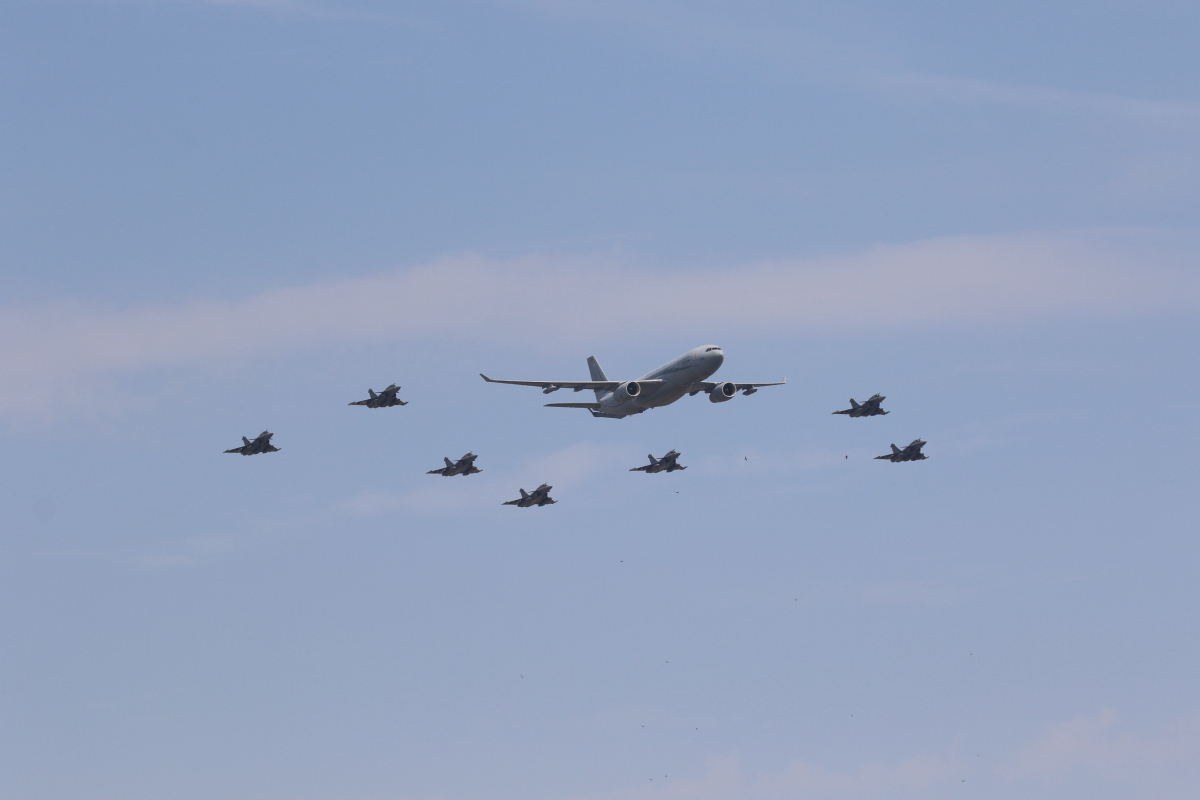
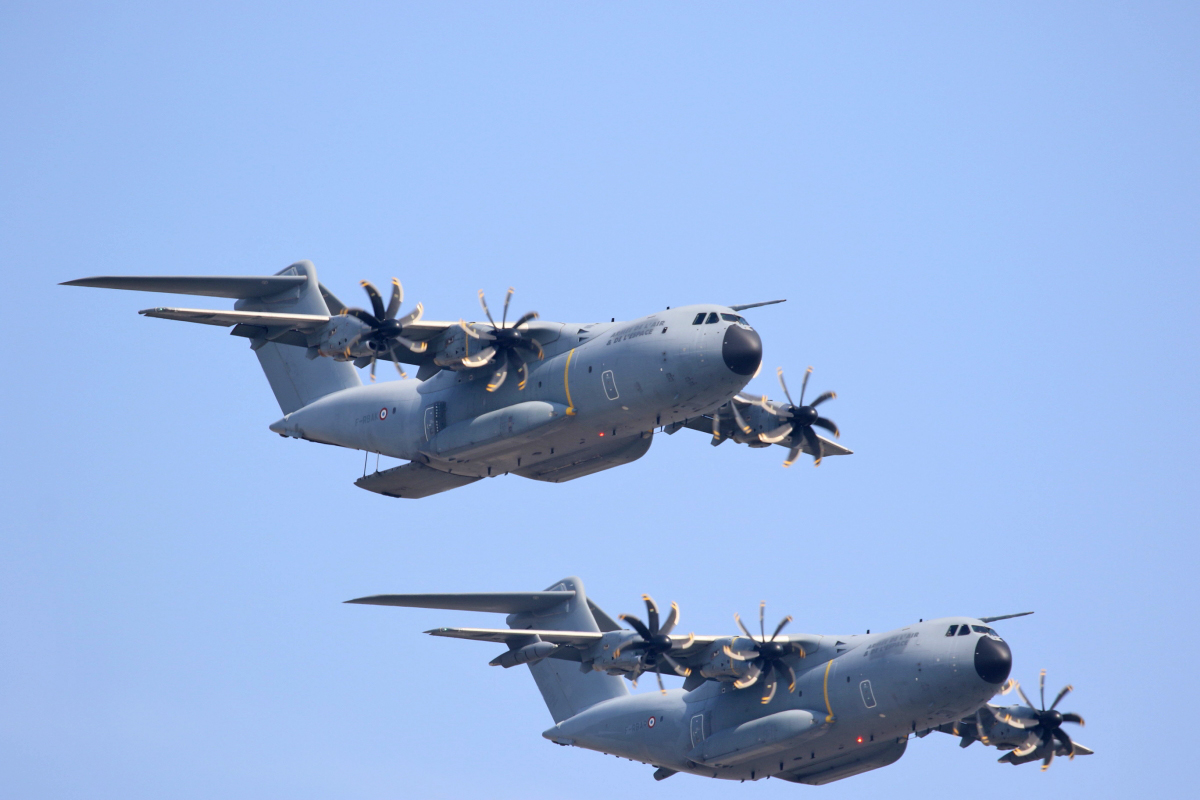
fighter-heavy programme. A400M Atlas and C-130J Hercules aircraft
appeared in multinational formations, with French aircraft joined by
partners such as Germany and the United Kingdom. Other participating
European air arms included aircraft from countries including Poland,
Denmark, Greece, Sweden and Spain. |
|
|
The Airbus A400M Atlas serves as a core tactical and strategic transport asset for the French Air and Space Force.
|
|
|
Helicopters from Chartres and Villacoublay
After the fixed-wing section the helicopters followed, bringing a lower
and slower rhythm to the display. The rotary-wing aircraft came from
bases including Chartres and Villacoublay and represented several
branches and roles, from tactical transport and battlefield support to
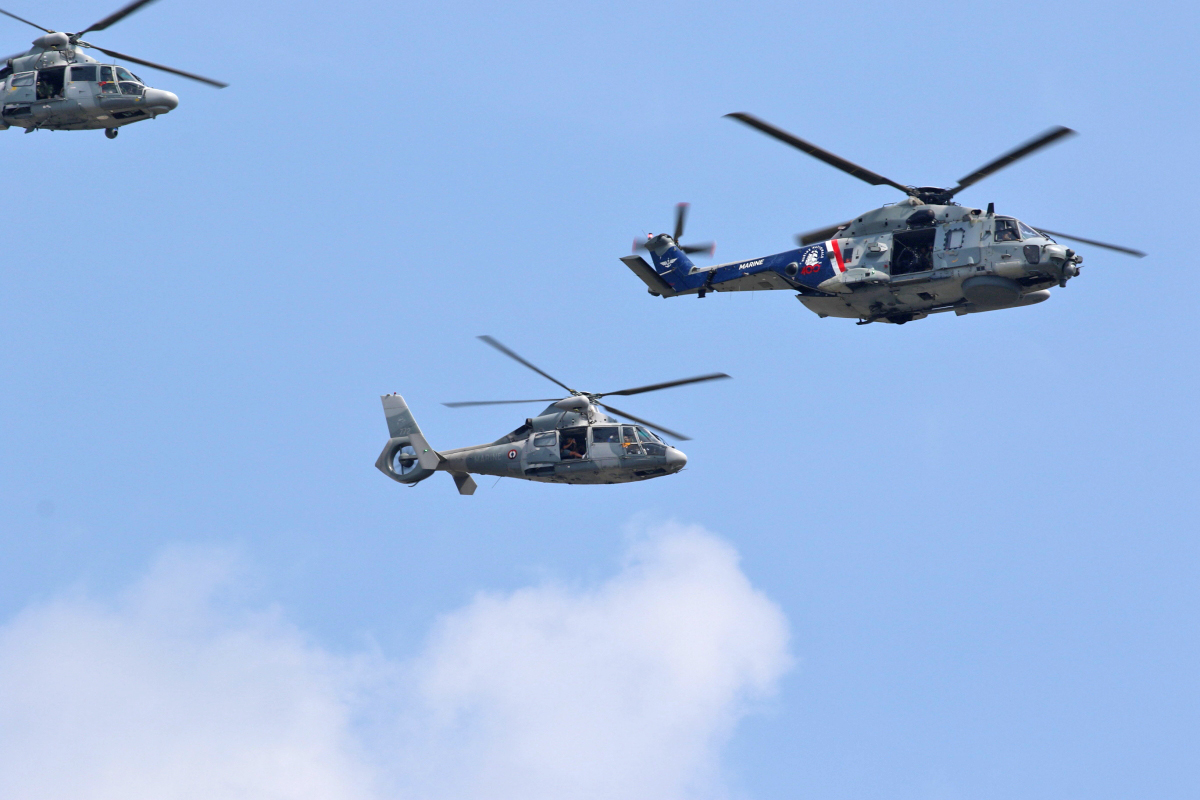
maritime and security tasks. Types such as the NH90 Caïman, Tigre and
other French military helicopters provided a useful contrast with the
earlier high-speed fighter formations.
|
|
|
|
The NH90 Caïman (including naval and special forces variants) featured prominently in the flypast over Paris.
|
|
Photographing from Les
Invalides
The position near Les Invalides worked well for a broad overview of the
parade. The aircraft were already established in their formations and
the spot allowed a good view of the different formations. As always in
Paris, timing was important: once the formations start coming down the
display line things move fast and there is almost no let up. The larger
groups offered the best opportunities to show the scale of the event,
while the smaller pairs and support aircraft gave more detail and
variety.
Several air force fighter formations had staged from Évreux, while the
helicopter elements used Chartres and Villacoublay. That also gave the
day a wider aviation footprint than the few minutes visible above
central Paris: the flypast may be seen over the city, but it is
prepared and executed from a network of French military airfields
around the capital.
The air transport and support section added welcome
variation to the fighter-heavy programme. A400M Atlas and C-130J Hercules.
|
|

|
|
The primary aircraft operated by the French Special Forces shown in the Bastille Day flypast over Paris.
|
Conclusion
The 2026 Bastille Day flypast was a memorable morning for aviation
photography. It combined the traditional elements of the French
national parade with a larger-than-usual aerial programme and a broad
European participation. From our spot near Les Invalides the sequence
was intense, varied and very photogenic. With the photographs of the
different formations added, this report will give a clear impression of
one of the most impressive flypasts over Paris in recent years.
|
 |
|
|